


Understand large-scale river discharge, even in regions with limited in-situ observations.
Aqunia Water is a solution that enables the estimation and monitoring of river discharge at basin scale by integrating satellite data, hydrological simulations, and limited ground-based observations. It supports planning in hydropower, agriculture, and industry, as well as water resource management under climate change.
Climate change is amplifying the “imbalance” in water resources.
As climate change progresses, the global hydrological cycle is undergoing rapid transformation. A warmer atmosphere can retain more moisture, leading to the paradoxical intensification of both extreme rainfall/flooding and droughts. While annual precipitation trends vary by region, the temporal and spatial unevenness of water resources is increasing worldwide, with “too much” and “too little” water occurring simultaneously.
In particular, in basins dependent on glaciers and snowpack, accelerated melting is significantly altering seasonal river discharge patterns.
Hydropower.
Variability in river discharge directly leads to instability in power generation. Understanding and forecasting seasonal and interannual flow variability is essential for reliable power supply planning.
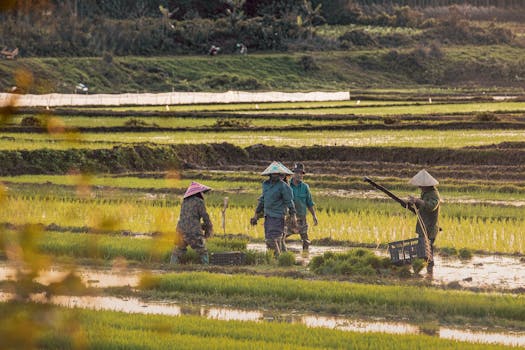
Agriculture & Irrigation
Cropping plans and irrigation schedules depend on water availability. Without predictions of flow and water levels, it is difficult to adequately prepare for drought risks and flood damage.
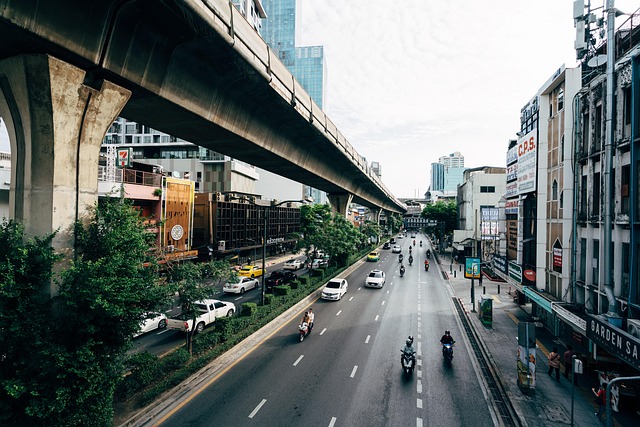
Industry & Urban Infrastructure
Water-dependent sectors—including manufacturing processes, cooling systems, and drinking water supply—must quantitatively assess variability risks in water resources in advance.
To address these challenges, continuous monitoring of water resources across entire river basins is essential. However, in many developing and emerging countries, in-situ observation networks are limited, and sufficient data is not available. Aqunia Water directly addresses this issue.
Basin-scale river discharge estimation through integration of satellites, models, and in-situ data
Even in regions with limited ground-based observation stations, basin-scale river discharge can be estimated and monitored by combining the following three data sources:
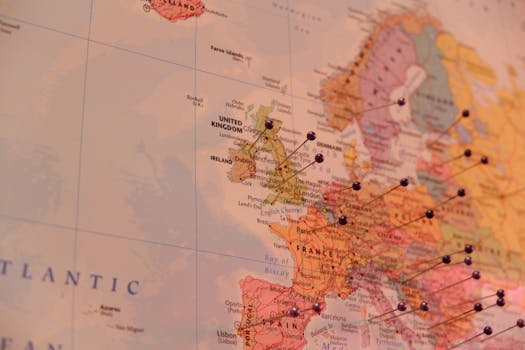
Satellite Data
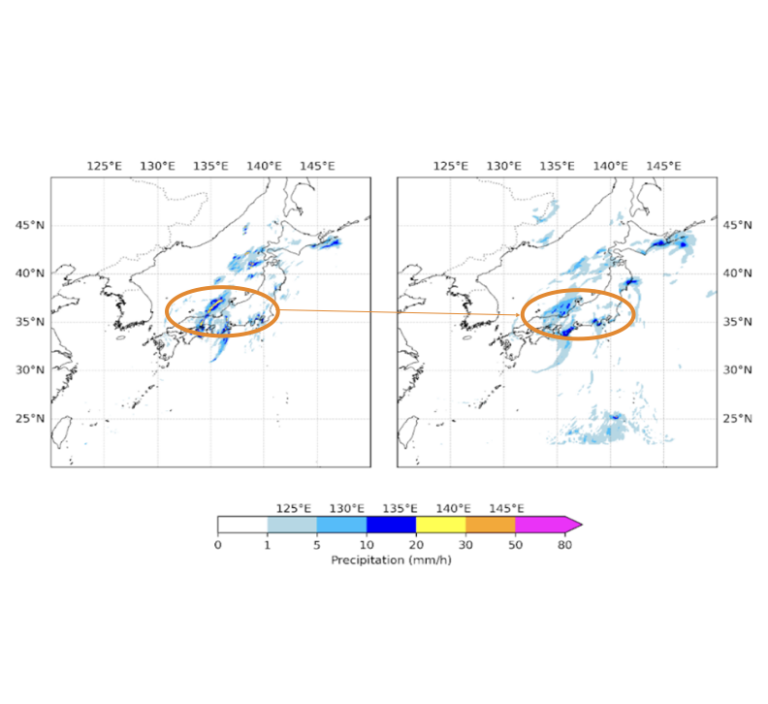
Utilizes satellite precipitation data (e.g., GSMaP) and satellite altimetry (e.g., SWOT, DAHITI) to estimate water level and volume changes in basins where direct observation is difficult.
Hydrological Simulation Models
Employs large-scale river simulation based on CaMa-Flood / ILS developed at the University of Tokyo, incorporating basin topography, land use, and precipitation patterns.
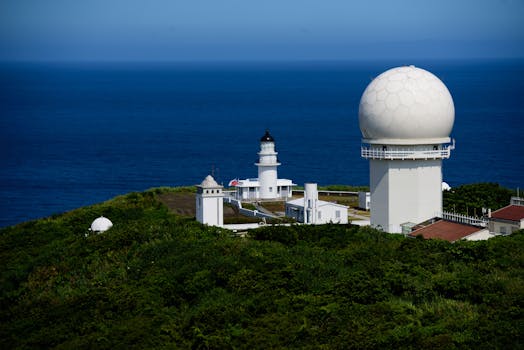
Limited In-situ Observation Data
Available discharge and water level observations are used for integration and calibration, improving simulation accuracy.
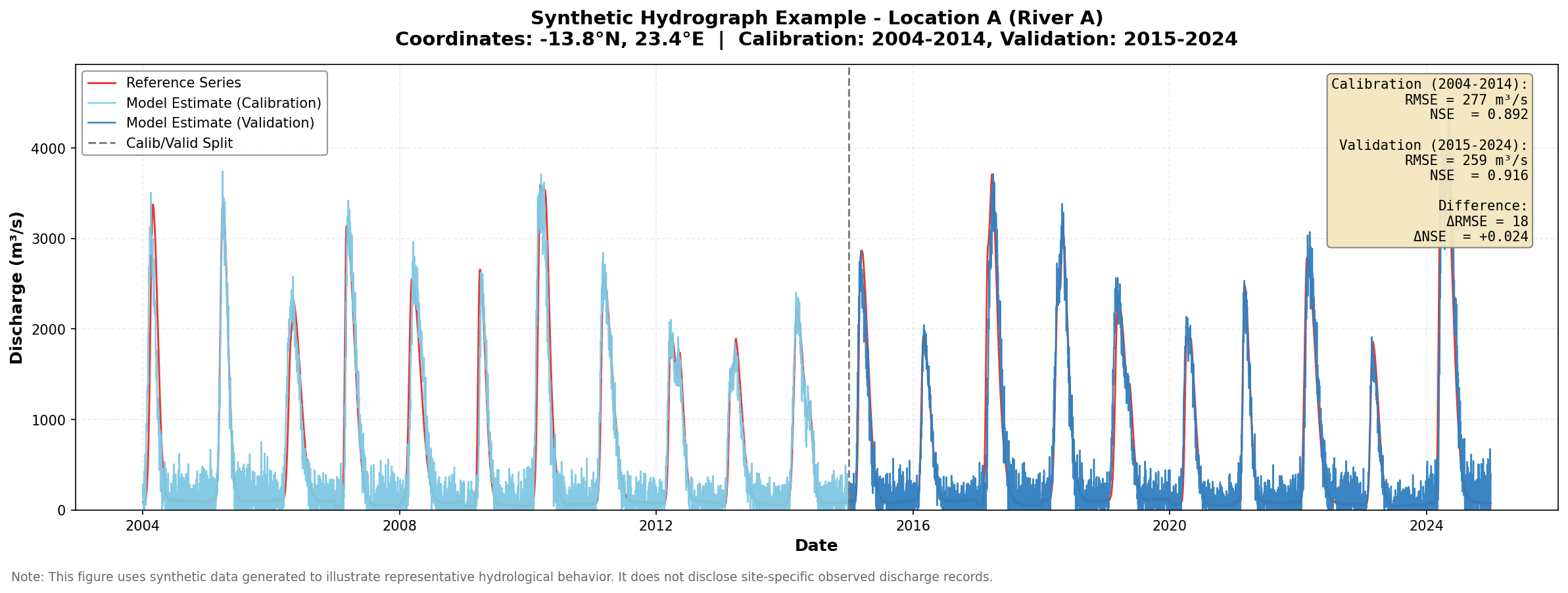
By combining these three data sources with our proprietary localization technology, we have confirmed that past river discharge can be estimated with reasonable accuracy even in ungauged locations (demonstrated in Zambia, Africa).
Case Study: Zambia — Demonstration of digital and space technologies for a national water resources master plan (JICA)
As part of a digital technology demonstration project for the formulation of a water resources master plan in Zambia by JICA, we conducted a joint project with ME-Lab Japan to estimate water resource data using satellite data and simulation technologies. In African basins with limited ground observation infrastructure, the effectiveness of model-based discharge estimation was confirmed.
- Location: Zambia
- Partner: ME-Lab Japan (Aqunia Water participated as a subcontractor)
- Scope: Demonstration of basin-scale water resource data estimation using satellite and simulation technologies
Expected Needs
- Government agencies / water authorities: lack sufficient water resource data and require a basis for planning and management
- Governments / municipalities: need to develop long-term water strategies under climate change
- Energy operators: require improved accuracy in flow forecasting and hydropower planning
- International development organizations / agribusinesses: need water availability data for agriculture and irrigation planning
- International development organizations: need to advance water resource projects in data-scarce developing and emerging countries
Target Regions
Southeast Asia, South Asia, Central Asia, Africa, and Latin America
Tell us about your target region and challenges.
Aqunia Water is continuously advancing development and demonstration. Engagement can begin with a discussion of your specific region and challenges.